Protect the natural form.
FROM LIVING BLOOM TO LASTING FORM
How We Preserve Our Roses
How a real rose becomes an Eternity Rose.
Every Eternity Rose begins as a natural flower. Its individual curves, petals and leaves are preserved rather than copied, then strengthened and finished through a multi-stage process of coating, electroplating, inspection and hand preparation.
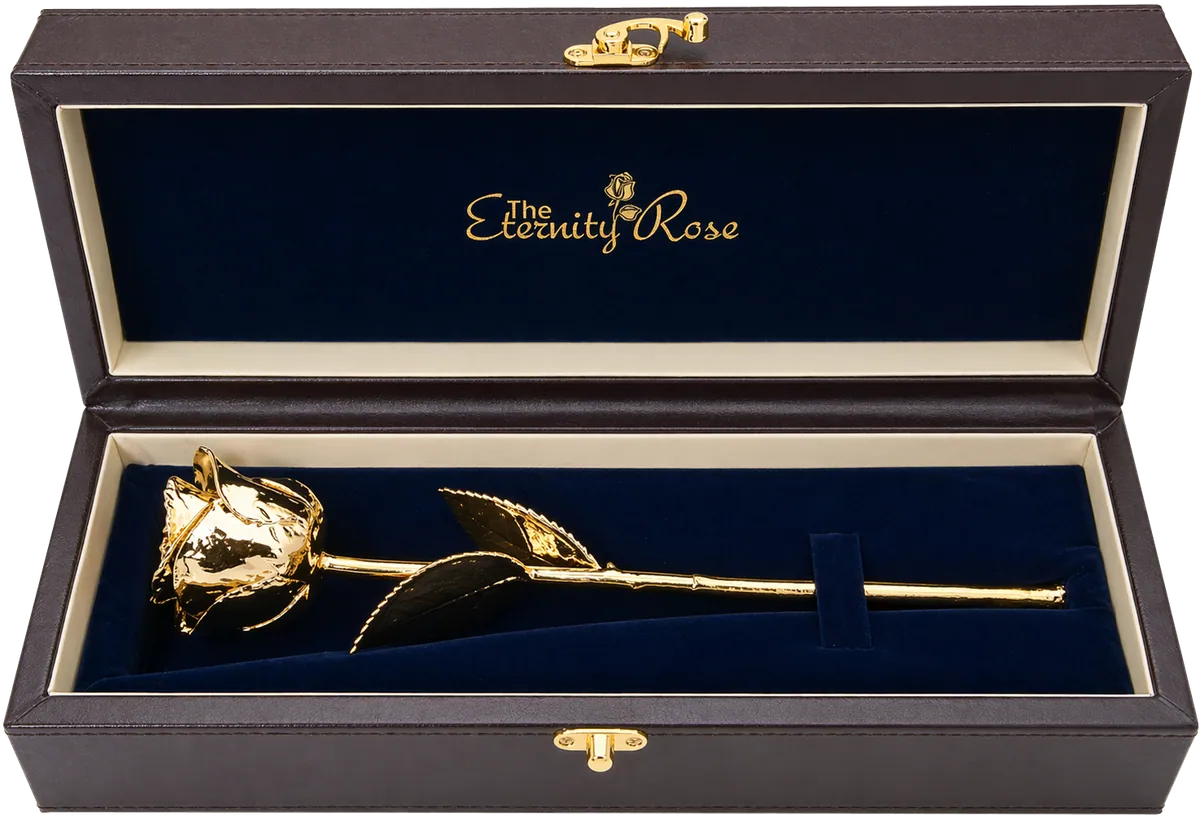
Multi-stage preservation and plating
OriginA genuine natural rose
MethodMulti-stage preservation and plating
ResultEvery finished form is individual
WATCH THE CRAFT
See the multi-step process in motion.
The film begins when it enters the screen. Watch a natural bloom move through careful preparation, preservation and finishing before its final inspection and presentation.
Explore Eternity Roses01 · Selection
The right rose, at the right moment
Experienced growers watch the flowers as they open and select individual blooms for form and balance. Because the starting material is natural, no two stems, leaves or petal arrangements are identical. That variation is part of the finished piece rather than a defect to be erased.
- Selected as a real bloom
- Handled while fresh
- Individual natural form retained
02 · Preservation
Holding the structure before metal is added
A clear protective coating helps the flower retain its shape for the electroplating stages. Conductive and structural layers are then built gradually, including copper and nickel in the process described on the existing website. Each layer must follow the fine texture of the original rose.
Add fine structural layers.
Check detail before the next stage.
03 · Finish
Precious metal or glazed colour, applied with patience
For gold, silver and platinum finishes, many thin electroplated layers are built over time before final polishing and quality control. Glazed roses use colour to celebrate the natural form, with selected details trimmed in precious metal. The whole process takes weeks rather than a single coating step.
Final inspection considers finish, structure and presentation before the rose is fitted into its case.
QUESTIONS ANSWERED
Answers to the questions we hear most.
Are Eternity Roses cast from a mould?
No. The preservation process begins with a genuine natural rose, so every finished form has its own variations.
Why are copper and nickel used?
The existing process description says copper captures texture and provides a plating base, while nickel contributes structural integrity before the final precious-metal finish.
How long does the process take?
The live site describes a multi-stage process that builds many thin layers over several weeks. Exact production timing should be confirmed before publication.